
Is the first thought in minds a branch of psychology about
"money"? is the question. It is a satisfying answer for a person who
does not know, but a funny one for those who know.
There are various definitions of parapsychology. But the truth is that Parapsychology is a field that everyone is very curious about. Parapsychology; Extrasensory perception means experimental research on the phenomena that are thought to be paranormal (non-normal) related to subjects such as psychokinesis, "life after death", that is, phenomena that can be measured by clinical findings. As a word meaning, it means beyond psychology, behind, on the edge.
"Parapsychology" is the science that studies paranormal forces, phenomena, and abilities. This word was coined in the 1920s by Dr. It was adapted from the French psychologist Emil Boirac's word "parapsych-chique" by J. B. Rhine, meaning "beyond psychology", and was approved by the International Conference on Psychic Research held in Utrecht, the Netherlands in 1953, for use by parapsychic researchers among themselves.
- 20th century ago, the word parapsychology was called "occultism". (Psychologists Psychiatrists Association)
- Its area on Islam is included in Sufism and Sufism.
- Shaman Traditions on the Turks
- Parapsychology 20th century. It has been accepted as a science in America.
Parapsychology is a scientific discipline. During the Cold War (1945-1990),
parapsychological research was exposed to liberal-fascist-Soviet smear
campaigns. Parapsychological Researches, after that, interestingly brainwashed
the people and attributed them to adjectives such as "sorcery,
charlatanism, sorcery". But these states have established top-secret
parapsychology research centers in their own countries and their budgets are
covered by the taxes of the people who think parapsychology is witchcraft.
***(A small "communist" country like Czechoslovakia had perhaps the most advanced and secret Parapsychology Research Center in the world in the 1960s.)
Parapsychological research has a history of almost a century in Turkey; It is known that since the 1890s, especially in the lodges established in Istanbul, Izmir, and Mersin, parapsychological research was carried out within the framework of the conditions of that day. In the Islamic tradition, many applications fall within the scope of parapsychological research.
For example, Taşköprülüzade's "Annotation" on the science of "Miftah = Key" was taught "secretly" in the lodges in Bursa, Izmir, and Istanbul. Between 1917-1918, a Parapsychological Research Center was established for the first time in Istanbul.
The founder of this center in Sıraselviler in Istanbul was the famous Gurdjieff.
This person was a Georgian born in Kars, belonging to the Orthodox sect, and
was a child of the same region as Stalin. After the Bolshevik Revolution, he
first came to Kars and then to Istanbul with his followers. After a few years
in Istanbul, Gurdjieff went to France, where he established an institute and
continued his parapsychological research. Gurdjieff was also associated with
Blavatsky, who was also a famous Russian. Among the famous Turks who visited
Gurdjieffin Parapsychological Research Center in Istanbul most frequently was
Rıza Nur, the "executive director" of the Lausanne Conference! Dr.
Rıza Nur was so impressed with this mysterious Russian "theosophist"
that, he wrote, he fell into depression. One of the scholars influenced by
Gurdjieff's "spiritual" work was Dr. Bedri Ruhselman.

Why can't parapsychology be scientifically proven?
Parapsychology cannot be considered a science because of three problems. These problems are:
- Repeat problem
- Insufficient supervision
- Filing problem
When people with psychic abilities are subjected to tests and experiments,
it is necessary to pass a certain percentage for something to be proven, so we
have to eliminate the factor we call luck in the experiment at a minimum level.
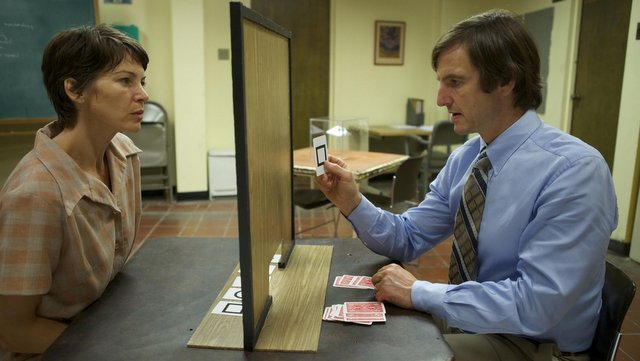
Sample; In telepathy experiments, if the subject knows 7 out of 10 zener cards, there is a chance. To reduce the probability possibilities, the subject should know between 7-10 card numbers in each experiment, and then the problem of repetition will disappear. For the experiment to take place, the environmental conditions should not be different, but since it is a mental process of the person, any thought that will come to his mind may disrupt him during the experiment and may not bring continuity. But throughout history, there have been many telepathy experiments and psychic subjects recorded in the private works of the state.
Misconceptions About Parapsychology?
Parapsychology is a research field and there are still scientific studies that are still going on today. Trying to find tangible evidence instead of abstract evidence. - Parapsychology abilities in many areas have been proven in animals. (Ex. Dolphin-Telepathy) - It is the title given to the parapsychologist researcher and the people who wrote scientific articles on it. - It is not a field that teaches psychic abilities, but a field of research that studies and researches people with these abilities. - There are elective courses or research laboratories in Europe and various regions.
Difference between Parapsychology and Metaphysics?
First of all, they have different
opinions. Parapsychology argues that our psychic abilities are our natural
abilities, with no outside influence from our essence. Metaphysics, on the
other hand, argues that our psychic abilities come about through an external
factor. These two different sciences are separated by two different views. In
ancient times, Parapsychology was included in the field of Metaphysics, and you
may have heard counter-arguments on this subject. But the fact of the matter
changed after Parapsychology was named scientific.
While the word parapsychology means Beyond Soul.
It is important to remember that the word metaphysics means Beyond Physics.
Some Topics Covered in Parapsychology
Today, we can list some of the topics that fall under the field of study of parapsychology:
Extrasensory Perception (ESP): Telepathy, Clairvoyance/Premonition
Psychokinesis (PK): Telekinesis / ESP in Dreams / Hypnosis and ESP Under Hypnosis I ESP in Animals (ANPSI) I Parapsychology in Plants / Clairvoyance / Psychometrics / Levitation
Teleportation: Teleportation / Paranormal Healing and Surgery (PSI-TIP) / Paranormal Diagnosis and Otoscopy, Alterascopy, Telemnesia / Mobile Clairvoyance I Astral Travel (OOBE)
Body Energy Centers and Fields: Chakras and Amalar / Energy Bodies / Kirlian Photography / Biocosmic Energy and Psychotronic Science / Geller Effect / Conscious Body Controls / Altered States of Consciousness (ASC)
Tekinsizev: Spontaneous PK (RSPK) / Thought Photography / Eyeless Vision / Radiesthesia and Radionics Science / Suggestionology / Psychic Archeology / Knowing the Past.
(The British Society for Psychical Research (SPR), founded 1882, which took the first steps with its experiments in the "classical" sense.)
In a list Hereward Carrington presented to his readers in the 1930s, the
list of countries with parapsychological research associations, excluding the
countries of leading associations, is as follows;
Austria, Russia, Spain, Portugal, Netherlands, Belgium, Switzerland, Greece, Poland, "Turkey", Iceland, Japan, Mexico, Canada, Ireland, Australia, New Zealand, South Africa, India, China, and Argentina. Informal organizations existed in almost every country in the world.
Some universities in Europe with a major in parapsychology are: (only a very small part)
- University of Edinburgh, Koestler Parapsychology Unit (KPU),(Scotland)
- Northampton University, Department of Parapsychology (England)
- Utrecht University, Chair in Parapsychology (Netherlands)
- Lund University, Department of Parapsychology (Sweden)
- the University of Hertfordshire, Department of Psychology,
Perrott-Warrick Unit (England)
- University of London, Goldsmith, Abnormal Psychology Research Unit
(England)
- Liverpool Hope University, Parapsychology Research Group (England)
- Liverpool John Moores University, Consciousness and Transpersonal Psychology Research Unit (England)
Interview on the Future of Parapsychology
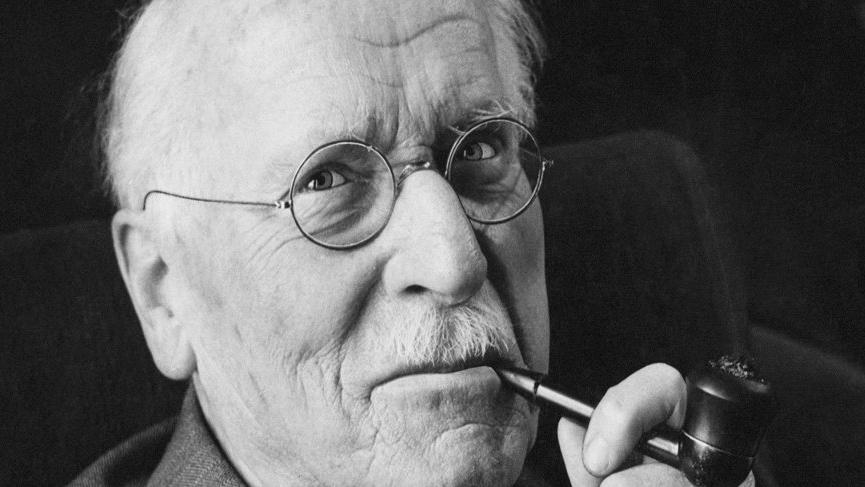
In the Autumn 1963 issue of The International Journal of Parapsychology, published in New York (vol. 4, p.450), CGJung responded to a survey sent to various authorities in June 1960 regarding research conducted under the title "The Future of Parapsychology". 's replies were published:
How would you define parapsychology?
C- Parapsychology is the science of biological or psychological phenomena that show that the categories of matter, space, and time (and therefore "causality") are not axiomatic.
What research areas, in your opinion, should be classified as belonging to parapsychology?
C- The psychology of the Unconscious.
Do you hope future research will focus on quantitative or qualitative studies?
C- Future research should focus on both.
Do you believe a repeatable experiment is necessary to strengthen the position of parapsychological research within the scientific community?
C- Repeatable experimentation is desirable (something) but, from a (parapsychological) point of view, the experimental method will not be generally applicable (a method).
Do you have any comments on recent criticisms of statistical methods used in parapsychological research?
C- Statistical method, whenever and wherever applicable, is highly desirable and indispensable for scientific research. However, this (use of the method) is only possible if the (research) subject demonstrates a certain regularity and comparability.
Do you have any comments on the psychological meaning of some psychic phenomena?
C-The psychological meaning of parapsychological events has hardly been studied yet.
Do you have any comments on specific psychological conditions that seem to be for or against the possibility of psychic phenomena occurring?
C- The factor in favor of the occurrence of parapsychological events is the existence of an active "archetype", that is, a situation in which the deeper, instinctive layers of the "psyche" are activated. The archetype is a boundary phenomenon manifested in the association of space and time, as mentioned by Albertus Magnus (De mirabilis Mundi), whom I mentioned in my thesis entitled "Synchronicity: An Acausal Connecting Principle".

Post a Comment